Look back over these retrospectives and one pattern repeats. Every gain in what AI could do (retrieval, open models, reasoning, tool access, agents) arrived before the controls to match it. The gap was never capability. It was trust.
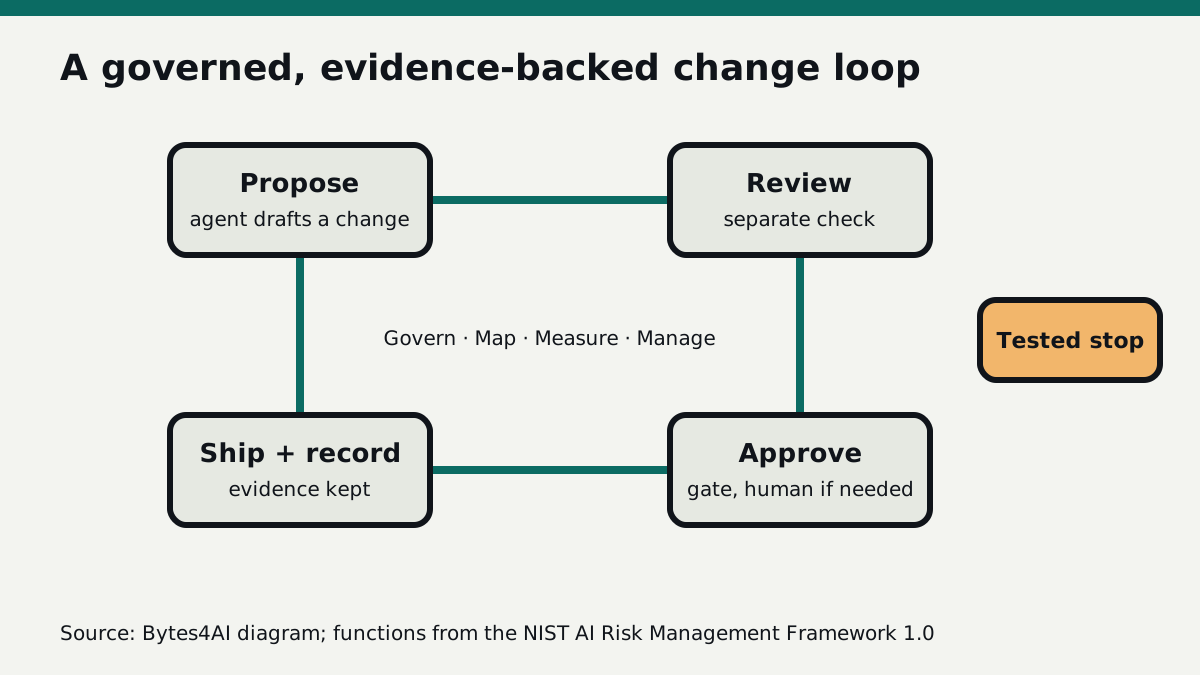
The frameworks to close it already exist. NIST's AI Risk Management Framework, released in January 2023, organizes the work into four functions: govern, map, measure and manage. The EU AI Act's human-oversight article asks that people can understand, override and stop high-risk systems. What most organizations lack is not a framework but the machinery that makes those words true every day.
We think the next step looks like this. Agents propose changes; they do not push them. A separate reviewer checks each change. An approval gate decides, with a human where the stakes need one. Every step leaves evidence: what was proposed, who checked it, what was approved, what shipped. And a stop control that has been tested, not just drawn on a slide. Autonomy then grows the way trust does with a new colleague: one well-evidenced change at a time.
This is the idea behind TejasLand, the platform we are building and run this site on. It is an early product and we say so plainly on the Platform page, including which controls work in our DEV environment today and which are still waiting for a supervised drill. We would rather show the evidence than claim the result.
The organizations that get the most from agents next year will not be the ones with the most agents. They will be the ones that can show, for any change, who proposed it, who checked it and how to undo it, closing the monitoring-versus-stopping gap described in the governance-containment gap.
What to do about it
Pick one agent workflow and put it through a governed loop: proposal, independent review, approval gate, recorded evidence, tested stop. Our Govern service sets up that loop around your agents, and you can see how we run our own on the Platform page. See Govern.