A language model cannot reliably tell the difference between instructions from its user and instructions hidden in the text it reads. That is prompt injection, and the OWASP project put it at the top of its list: LLM01 in the Top 10 for LLM Applications 2025.
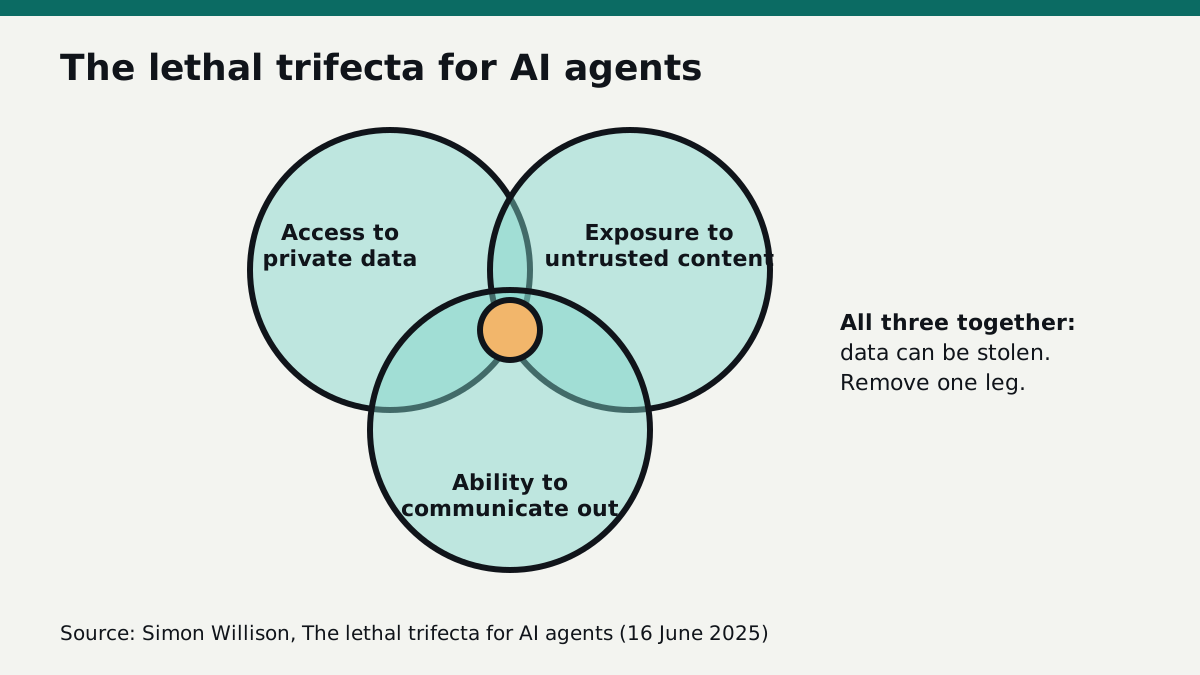
While models only chatted, the damage was limited. In 2025 agents started reading email, web pages, tickets and documents, and acting on them. Simon Willison gave the risk a clear shape with "the lethal trifecta": an agent that has access to private data, is exposed to untrusted content, and can communicate externally can be tricked into sending your data to an attacker.
Real products hit exactly that pattern. Microsoft assigned CVE-2025-32711, described as AI command injection in Microsoft 365 Copilot that allowed an unauthorized attacker to disclose information over a network, with a CVSS score of 9.3 [3].
The uncomfortable lesson of the year: there is no filter that makes injection go away. The defences that work are structural. Remove one leg of the trifecta for each workflow, give the agent the narrowest credentials that do the job, require a human confirmation before sensitive actions, and log every tool call so you can see what happened.
Security moved from the model to the system around it.
What to do about it
For each agent, write down which legs of the trifecta it has, and remove one. Then scope its credentials and log its actions. Our Govern service puts tested stop controls, audit trails and scoped credentials around your agents. See Govern.